

Recently, times, the rise of drone technology has revolutionized many fields, and surveying is no exception. Traditional surveying methods, even though they are effective, frequently come with constraints in terms of timeliness, expenses, and ease of access. Introducing drone surveys, a cutting-edge solution that marries precision and efficiency to revolutionize the way we collect and analyze data. The advantages of using drones in surveying are profound, making them an ever more favored choice for experts across multiple sectors.
From construction and land development to environmental monitoring and agriculture, drone surveys offer unique benefits that conventional methods simply cannot equal. With their ability to capture high-resolution images and collect data quickly, drones enable more accurate planning and decision-making. As we delve into the details of this novel approach, we will explore 30 reasons to evaluate drone surveys for your upcoming project, highlighting their impactful effect on industries like construction and real estate. Whether you're a project manager, a land developer, or a farmer, understanding the nuances of drone surveys can empower you to leverage the complete potential of this technology for your particular needs.
Benefits of Drone Surveys
Drone surveys offer substantial advantages over traditional surveying methods, primarily due to their effectiveness and precision. Unmanned Aerial Vehicles can cover vast areas in a small of the time it would take with land-based surveying techniques. This enhanced speed allows for quicker project turnarounds, which is especially beneficial in fields like building, where timely data is crucial for preparation and execution. Additionally, unmanned aerial vehicles can easily access hard-to-reach or hazardous locations, ensuring that surveys can be conducted safely and without exposing personnel to potential risks.
Another notable benefit of unmanned aerial vehicle surveys is their ability to collect high-resolution images and data, which can be processed to create detailed maps and three-dimensional models. This level of precision enhances project planning and design, allowing teams to visualize project sites and make informed decisions based on reliable data. Furthermore, cutting-edge technologies such as 3D mapping and thermal imaging can be employed, providing even more valuable insights that aid in identifying problems that may not be visible to the naked eye.
Financial savings are another compelling advantage of using drone surveys. By reducing the amount of time and labor required for fieldwork, companies can significantly lower their operational expenses. Unmanned aerial vehicles also minimize the need for expensive equipment and reduce the risk of expensive mistakes associated with traditional surveying methods. With the added benefit of improved data accuracy and quicker turnaround times, drone surveys present a financially sound choice for various projects, promoting better financial control and resource allocation.
Accuracy and Technology
Drone surveys make use of advanced technology to ensure elevated precision and trustworthiness in collecting data. The combination of GPS and RTK technologies allows drones to achieve sub-centimeter accuracy, which is a significant advancement over conventional surveying methods. This accuracy is crucial for projects that require comprehensive topographical data, such as infrastructure development, land development, and ecological monitoring. As drones are equipped with high-def cameras and LiDAR systems, they can gather large-scale data rapidly, providing accurate measurements that are essential for effective project planning.
The applications used to process the data collected by drones plays a crucial role in improving accuracy. Photogrammetry, a technique that generates 3D models from 2D images, enables surveyors to study vast areas with exceptional detail. Topographical Surveys Oxfordshire and machine learning are also employed to enhance the data, reducing errors caused by factors such as land variations and weather conditions. The result is a superior output that meets the rigorous standards of modern surveying while allowing for seamless integration with existing CAD and GIS systems.
Additionally, the accuracy of drone surveys is influenced by atmospheric conditions, which can impact flight stability and data collection. Factors such as gusts of wind, precipitation, and lighting must be considered to improve survey conditions. However, advancements in drone technology, such as enhanced stabilization systems and enhanced sensors, help mitigate these challenges. As the technology continues to advance, the reliability and accuracy of drone surveys are anticipated to improve, leading to even wider applications across multiple industries.
Applications in Multiple Industries
Drone surveys have found significant applications throughout numerous industries, enhancing effectiveness and exactness in data collection. In the building sector, drones simplify site surveying and track progress, permitting for instant updates and improved project management. This capability not only accelerates the construction process but also helps in detecting potential issues early, ultimately leading to cost savings and timely project completion.
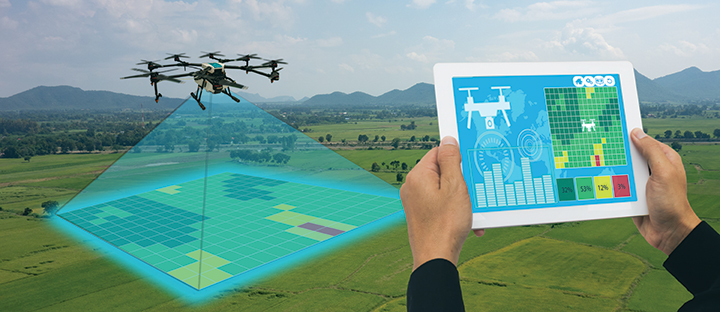
In farming, drone surveys are changing land management and crop planning. Farmers utilize drones to check crop health, analyze irrigation needs, and improve pesticide applications. The ability to swiftly gather and analyze data over vast areas enables farmers to make well-informed decisions that increase productivity and sustainability. This technology promotes better resource management and can lead to increased yields with lowered environmental impact.
Environmental observation and infrastructure inspection are other critical areas where drone surveys shine. Drones are utilized to examine natural habitats, monitor pollution levels, and carry out utility inspections, presenting a safer and more efficient alternative to traditional methods. By providing high-resolution imagery and detailed data, drones aid in making informed regulatory decisions and enhancing maintenance scheduling, thereby ensuring public safety and ecological protection.