

In recent years, the use of UAV surveys has changed multiple sectors, offering creative answers that enhance productivity and reliability. As advancements in technology occur, more companies and experts are discovering the various benefits associated with utilizing drones for survey work. From construction sites to crops, drones provide a high-altitude perspective that facilitates comprehensive data analysis and examination, changing the way we handle project management and implementation.
The potential is limitless when it comes to the applications of UAV surveying. Whether you're looking to carry out terrain analysis, conduct structural assessments, or even track ecological shifts, drones offer a safer and more cost-effective alternative to conventional survey techniques. This article explores 30 significant benefits to consider drone technology for your next project, highlighting how they are revolutionizing industries such as development, property management, and nature tracking. Join us as we investigate the thrilling realm of drone technology and its transformative impact on surveying practices. spintax Benefits of Unmanned Aerial Vehicle Surveys
Drone surveys offer significant advantages over conventional surveying techniques, particularly in regarding efficiency and precision. Drones can scan large areas quickly, collecting data in a small portion of the time it would require for a ground crew. This expedited process not just shortens project timelines but also allows for faster decision-making and project implementation. As a result, businesses can start projects sooner, optimizing their investment potential.
In addition to conserving time, drone surveys improve safety by reducing the need for personnel to work in hazardous conditions. For instance, assessing rooftops, power lines, and other high-risk areas is made safer with drones, which can reach these locations without endangering human lives. This aspect is especially important in construction, infrastructure, and environmental monitoring projects where worker safety is paramount.
Another prominent benefit is the high level of detail and accuracy that modern drone surveys provide. Equipped with advanced cameras and sensors, drones can capture high-resolution images and precise measurements that allow detailed topographical mapping and analysis. This data is essential for various applications such as land development, agricultural planning, and flood risk assessment, guaranteeing that stakeholders have reliable information to guide their decisions.
Tech Improvements in Drone Surveying
The domain of aerial surveying has seen notable advancements in technology, changing the way data is gathered and analyzed. Modern drones are equipped with state-of-the-art cameras and sensors, permitting them to capture detailed imagery and precise measurements from the air. The use of LiDAR (Light Detection and Ranging) tech has further enhanced the ability of drones to obtain exact geographical data, turning them invaluable for projects requiring intricate landscape evaluations. These developments ensure that surveyors can access and analyze information more efficiently than ever previously.
Another major advancement is the creation of autonomous flight systems, allowing UAVs to carry out inspections with reduced human intervention. These systems employ GPS and advanced algorithms to navigate complex environments automatically, guaranteeing uniform flight patterns and efficient data collection. As a consequence, aerial surveys can be completed quickly and accurately, even in rough terrains. Setting out engineering of automation not just increases efficiency but also decreases the potential for human mistakes, guaranteeing that project results are reliable.
In addition, advancements in data processing software have revolutionized how scanning data is utilized. Modern photogrammetry and data analysis tools permit rapid analysis of the information gathered by drones, generating 3D models and maps with remarkable precision. These tools enable professionals to interpret sites in different ways, allowing better judgments in construction, land development, and ecological oversight. The reach of this technology has broadened the scanning process, enabling more fields to benefit from the insights provided by drone inspections.
Comparative Analysis: Drone Surveys vs. Traditional Methods
UAV surveys and traditional surveying methods each have their own benefits and limitations. Traditional methods, often relying on land-based tools like optical surveying instruments and total stations, have been the norm for many years. They require a significant amount of resources and can involve rugged environments, which can complicate data collection. In contrast, aerial surveys can cover large areas in a fraction of the duration, minimizing on-site workload and overcoming geographic challenges effectively.
One significant advantage of aerial surveys is their potential to gather high-resolution aerial imagery and terrain metrics with exceptional accuracy. While legacy approaches may struggle with capturing complex landscapes, drones equipped with sophisticated equipment can produce detailed 3D models, enhancing the data quality. Moreover, aerial systems can provide instantaneous information that enables quicker decision-making, thereby enhancing operational flow and boosting project productivity.
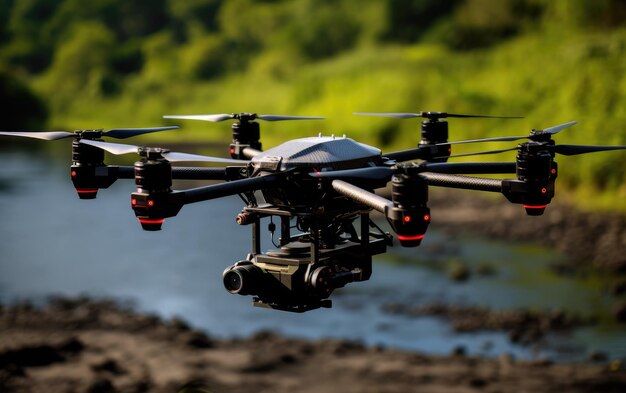
Financial viability is another critical aspect where drone surveys shine. Traditional surveying is personnel-heavy and often demands expert gear and multiple personnel, leading to higher costs. Aerial surveys, on the other hand, can significantly cut down on workforce expenses and the duration of field work, leading to better budget management. As tech evolves, the disparity in financial feasibility and operational effectiveness between UAV surveys and traditional methods will likely widen, making aerial technology the more preferable choice for a variety of projects.